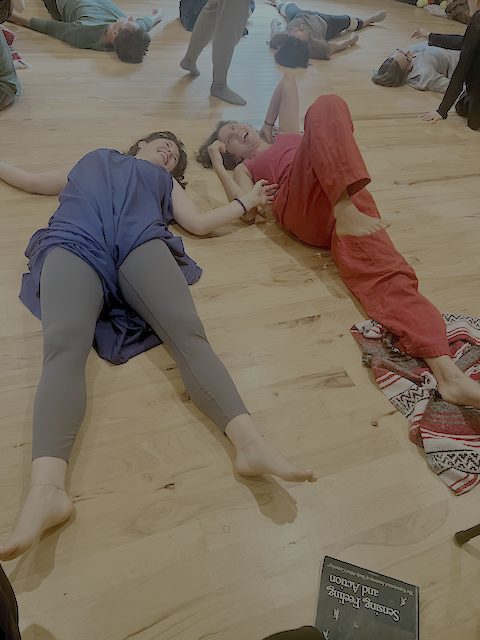
Body-Mind Centering®
Yield into who you are. What do you need to reach for what you want?
Witnessing makes change more possible.
What Is Somatic Movement?
Somatic movement is the practice of turning your attention inward—toward your internal sensations, movement patterns, and nervous system responses. It’s a way of understanding how your mind is expressed through your body in motion.
Rather than focusing on how movement looks, somatic movement focuses on how it feels.
This includes developing awareness of:
Interoception (your internal sensations)
Proprioception (your sense of position and movement)
Exteroception (your awareness of your environment)
Through this awareness-based lens, somatic movement can support greater nervous system flexibility, more ease in how you move, and a shift in your relationship to pain.
This work is not about doing more.
It’s a practice of noticing and being with yourself.
Over time, you may begin to feel more at home in your body—and discover new options in how you move, respond, and relate to yourself and others.
What Is Body-Mind Centering®?
Body-Mind Centering® (BMC®) is an integrated, embodied approach to movement, the body, and consciousness, developed by Bonnie Bainbridge Cohen.
It is an experiential study of anatomy, physiology, development, and the body-mind relationship—learned not through memorization, but through direct, lived experience.
In BMC®, learning happens from the inside out.
Through movement, touch, voice, and guided awareness, you explore how different body systems—muscles, bones, organs, fluids, and connective tissues—shape how you move, feel, and organize yourself.
What makes this approach unique is:
The ability to embody and differentiate individual body systems
A foundation in developmental movement patterns that support repatterning
A body-based language for understanding movement and perception
At its core, BMC® is a creative, self-inquiry process. You are both the student and the subject. The goal is not to fix the body, but to discover the ease and adaptability that underlie transformation.
This work is used across many fields, including physical therapy, somatic movement education, psychotherapy, dance, yoga, bodywork, and the arts. It offers a precise yet flexible framework for working with movement, awareness, and the nervous system in a deeply individualized way.
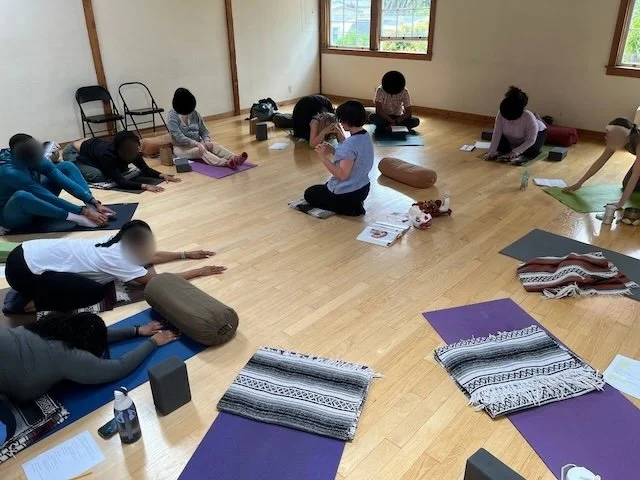
Biweekly Saturday BMC® class at Level Up Wellness and Physical Therapy
$25 First class free!
Mats, blankets, bolsters, blocks provided.
Wear layers and comfortable clothes to move in.
What Is Somatic Movement Education?
Somatic Movement Education is an open, creative, and person-centered approach to movement, healing, and self-awareness.
It is a process that supports you in exploring the relationship between body, mind, spirit, and environment over time.
Rather than trying to “fix” the body, this work invites you to:
Listen to what you feel
Notice patterns without judgment
Respond with curiosity, choice, and play
Your experience becomes meaningful information.
Awareness becomes a resource.
And with awareness, more options become available.
A Somatic Movement Educator guides this process—not by prescribing movement, but by helping you learn how to sense, interpret, and trust your own body.
This is a collaborative and trauma-sensitive approach, where:
You move at your own pace
Consent and safety are prioritized
Exploration is guided by curiosity, not force
Over time, this work can support a deeper sense of agency, resilience, and connection—to your body, your movement, and your lived experience.
How This Integrates with Pelvic Physical Therapy
In somatic pelvic floor therapy, these principles support people experiencing:
Pelvic floor tension
Chronic pelvic pain
Postpartum recovery
Trauma-related holding patterns
Stress-related symptoms
We work with:
Breathing and nervous system guidance
Focused and efficient movement based on foundational and developmental patterns
Awareness of internal resources (organs, tissues, abdominal fluid pressure changes and postural support)
Expanding movement options and always including opportunities to practice gently being easeful with your body
This is a slower, more relational approach to a personal movement practice—one that meets your body where it is and grows from there.